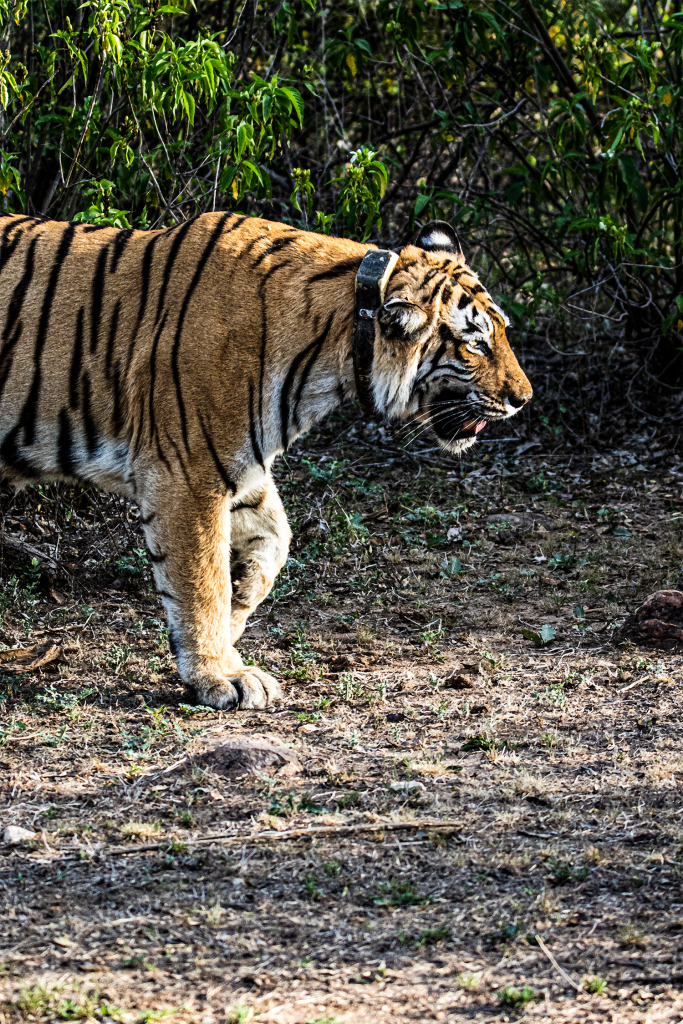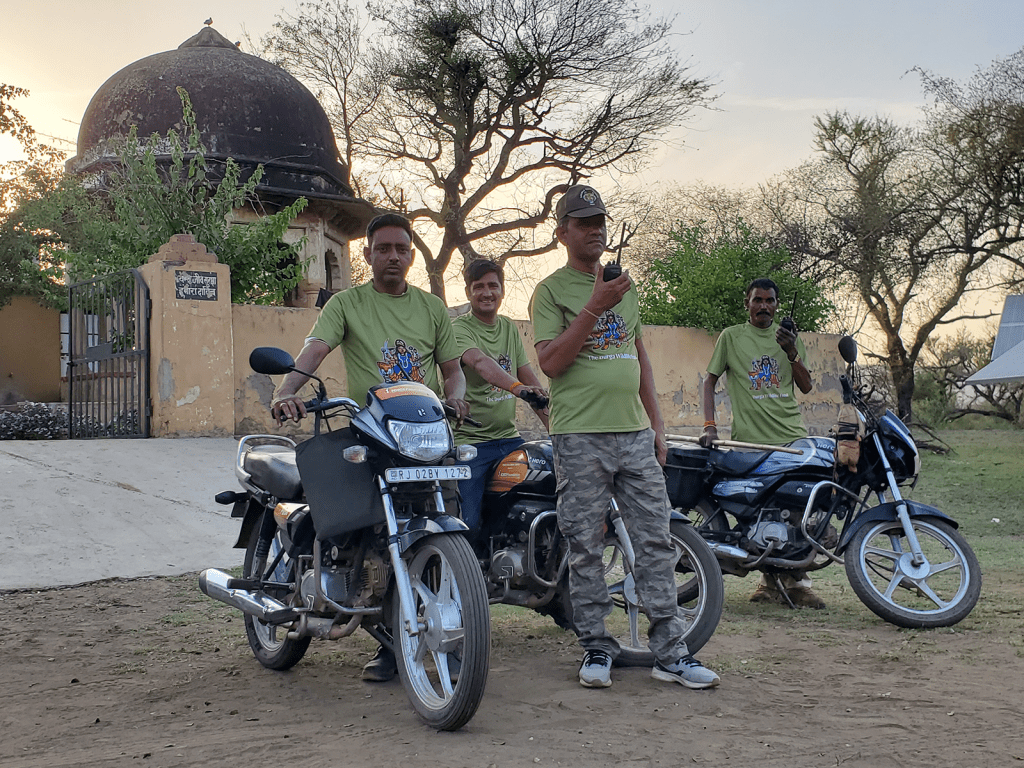
Forest Guards at Sariska. Photo by Dr. Elysian. Copyright 2023 Durga Wildlife Fund.
Catastrophe at Sariska
In 2005 the Sariska Tiger reserve in Rajasthan, India, discovered that it had no tigers.
The previous count had been a dozen tigers. In under four years (less time than it took for a tiger to grow to breeding age) poachers had killed every tiger in Sariska.
This was a blow and a wake up call for everyone involved in tiger conservation.
A few more Sariskas, and there would be no tigers left in the wild.
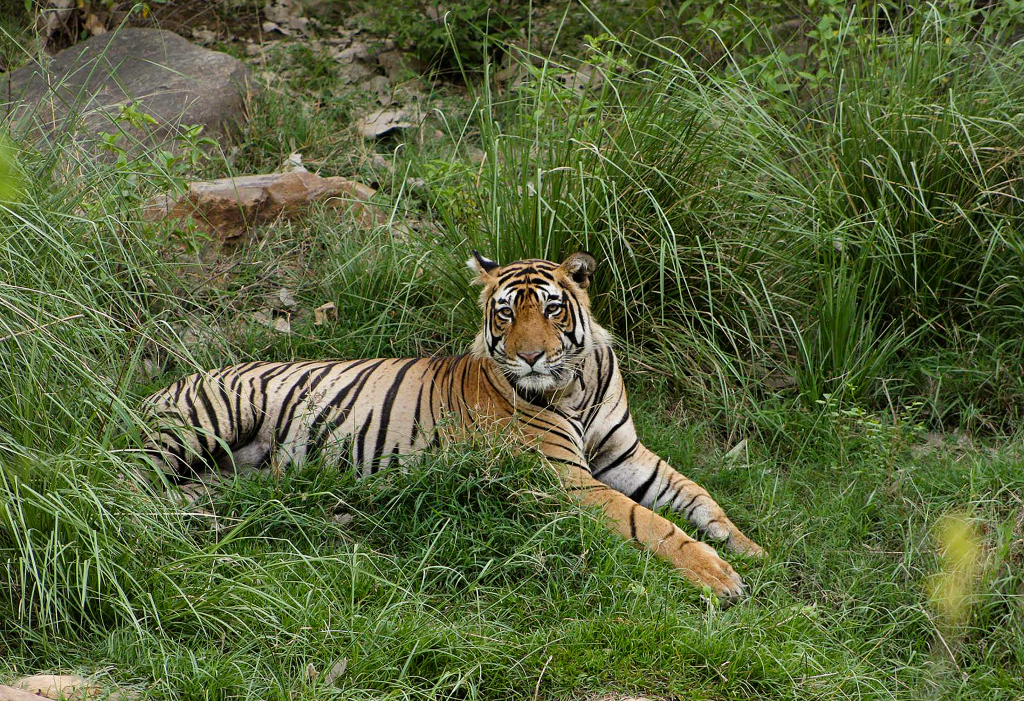
ST-1, the first tiger relocated from Ranthambore to Sariska. Photo courtesy of Sariska National Park.
In 2008 India began a bold program to relocate tigers from Ranthambore to Sariska. Such a relocation program had never been attempted before. With much effort, and despite setbacks (such as the poisoning of the first tiger relocated), the program was a success.
Today Sartiska is thriving with at least thirty wild tigers.
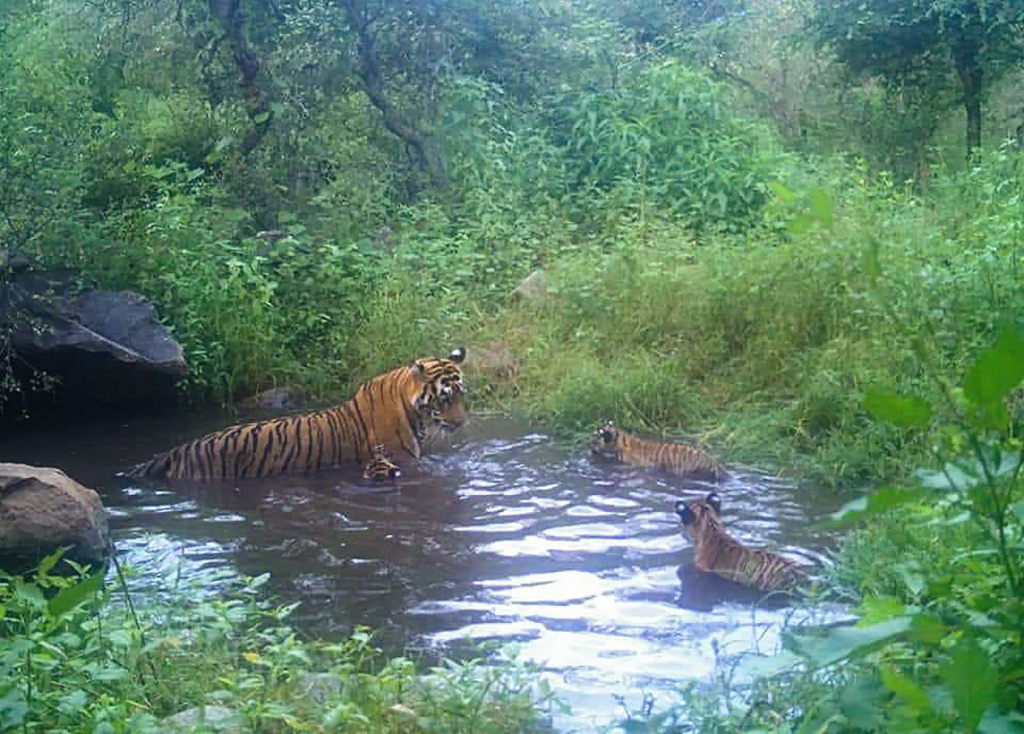
Tigress T12 with her cubs at Sariska. Photo courtesy of Sariska National Park.
Our Program at Sariska
While the Indian government and the state of Rajasthan have made impressive efforts to support tiger conservation, frontline forest workers still need some basic provisions for their patrols.
In 2023 Durga Wildlife Fund conducted several meetings with the forest department at Sariska.
They told us what they needed: walking-sticks, searchlights, goggles, water bottles, mosquito nets, and batteries.
We agreed to supply these items.
But more help is needed.
Most forest outposts are in remote areas without electricity or clean drinking water.
Guards are forced to drink contaminated water. This results in many health hazards and impacts monitoring and conservation efforts.
The Durga Wildlife Fund is hoping to provide Sariska’s forest staff with water filter systems for one hundred posts inside the reserve.
But we need your help to achieve this goal.
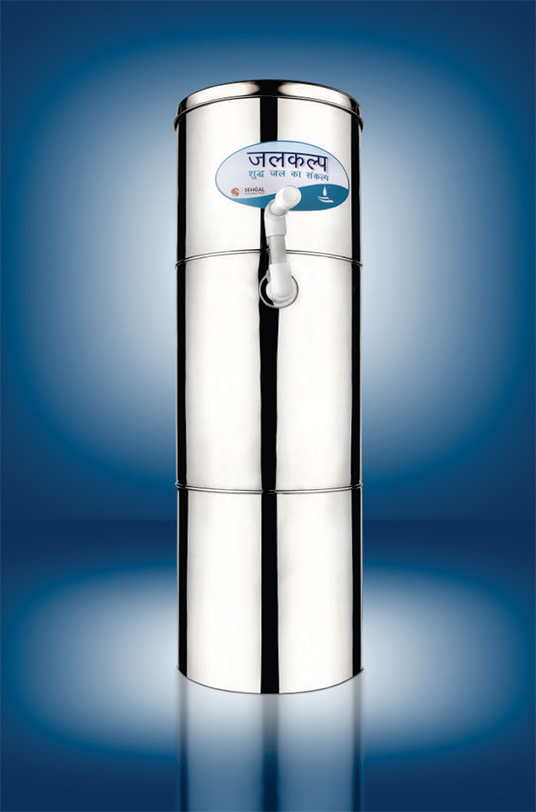
Providing one hundred water filters with supplies and training, will cost about $10,000.00 US dollars.
Can you please help us pay for this important program?
Please scan the QR Code below, or click on the link, to help us fund this important program.